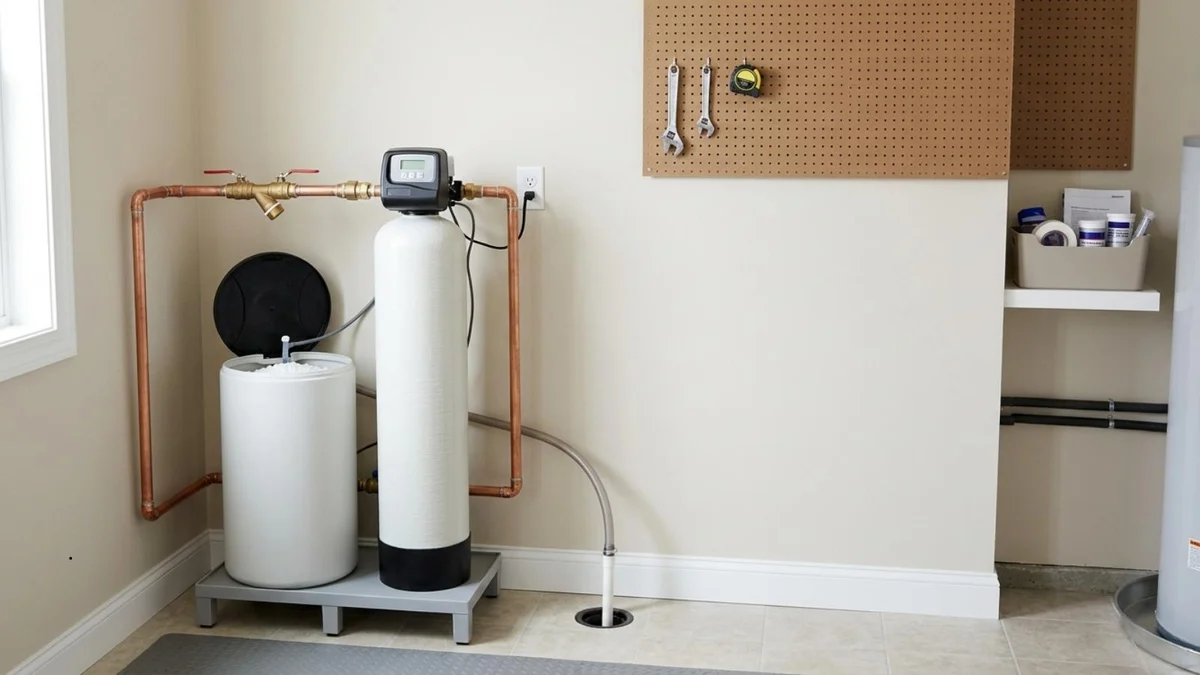
Most homeowners don’t spend much time thinking about their water softener. It’s one of those appliances that quietly does its job in the background, much like a water heater or furnace. As long as the shower feels good, the dishes look clean and there isn’t a mountain of white scale around every faucet, everything seems fine.
Then one morning, the water feels different.
Maybe the soap isn’t lathering properly anymore. Perhaps spots are appearing on freshly washed glasses, or the softener seems to be using more salt than it used to. These small changes can be easy to ignore, especially when life is busy. But they’re often signs that the system deserves a closer look.
A water softener can last for years when it’s properly selected and maintained. Still, no appliance lasts forever. Knowing when to repair, maintain or replace yours can save money and prevent a minor issue from becoming an expensive household headache.
Start With the Age of the System
Age is one of the simplest clues.
Water softeners don’t have a universal expiration date because their lifespan depends on water quality, usage, maintenance and equipment quality. A lightly used system that’s been maintained carefully may continue working well for quite some time, while another unit could begin struggling much earlier.
If you recently moved into a home and don’t know how old the softener is, check the manufacturer’s label or installation paperwork if it’s available. You may also be able to find the model number and look up its production information.
Don’t automatically replace an older system just because of its age, though. If it’s working properly and operating costs are reasonable, there’s no prize for replacing an appliance before it needs replacing.
Pay Attention to Changes in Water Quality
Your water often gives you clues before the equipment does.
Hard water can leave mineral deposits on faucets, shower doors and sinks. You might notice that your skin feels drier after bathing or that shampoo seems harder to rinse away. Laundry can feel less soft, too.
If these symptoms return after you’ve enjoyed consistently softened water, something may be wrong with the system.
Sometimes the problem is surprisingly simple. The salt level could be too low. A setting may have been changed accidentally. The system might not be regenerating correctly. In other cases, an internal component may be wearing out.
The key is not to assume that every water-quality problem means the entire unit has failed.
Maintenance Is Often the First Fix
A little routine care goes a long way.
Depending on the type of softener you own, maintenance can include checking salt levels, cleaning the brine tank, inspecting connections and making sure regeneration settings are appropriate for your household.
Salt bridges can also cause trouble. That’s when salt hardens into a crust or bridge inside the tank, creating the appearance that there’s plenty of salt even though the system isn’t getting what it needs.
Regular maintenance doesn’t have to become a weekend project. A quick inspection every so often, combined with following the manufacturer’s recommendations, can help catch problems early.
And don’t forget that the quality of the installation matters. A system that wasn’t correctly sized or installed can develop performance problems that aren’t really caused by the equipment itself.
Warranties Can Be Valuable — But Read the Fine Print
When buying a new water softener, warranties can provide useful peace of mind. Some manufacturers advertise lifetime warranties, but the word “lifetime” shouldn’t automatically make you assume everything is covered forever.
Warranty terms vary. Certain parts may have longer coverage than others, while labor, installation or service visits may be excluded. Some warranties may also require professional installation or regular maintenance.
Before buying, read the actual warranty document rather than relying solely on the sales pitch. Ask what happens if a covered component fails and whether replacement parts are provided at no cost.
A strong warranty is valuable. But a well-built system, good installation and dependable support matter just as much.
When Repair Makes More Sense
Not every malfunction calls for replacement.
If the system has a faulty valve, worn seal, clogged injector or electronic issue, repairing the individual component may be far cheaper than purchasing an entirely new unit.
The decision becomes less straightforward when several components are failing at once. If you’re repeatedly paying for repairs and the system is becoming less efficient, those repair bills can start to resemble a down payment on a replacement.
This is where an honest technician can be particularly helpful. You want someone who will tell you whether a repair is sensible rather than automatically recommending the most expensive option.
A local service company can also be convenient for ongoing maintenance because help is usually easier to arrange when someone familiar with your equipment is nearby.
Know When It’s Time to Replace
There comes a point when even a reliable old softener has simply done enough.
If the system is frequently breaking down, struggling to soften the water, wasting excessive salt or consuming noticeably more water during regeneration, replacement may be worth considering.
Technology has also moved forward. Newer systems can offer more efficient regeneration, improved controls and better monitoring. Some models are designed to adjust regeneration based on actual water usage rather than relying entirely on a fixed schedule.
That doesn’t mean every homeowner needs the latest smart system. Fancy features are only useful if they solve a real problem for you.
Choosing a Replacement Carefully
If you decide to replace your softener, don’t shop solely by price or tank size.
Start with your household’s water usage and the hardness level of your water. A professional water test can help determine the appropriate capacity. Think about how many people live in the home and whether water demand changes significantly during certain times of day.
You should also consider salt efficiency, regeneration frequency, warranty coverage, maintenance requirements and availability of replacement parts.
If your current system has served you well, you don’t necessarily need something dramatically different. But if you’ve been dealing with constant maintenance or high operating costs, it may be a good opportunity to rethink the setup.
In some cases, it really does make sense to upgrade your old water softener, especially when the existing unit is inefficient, unreliable or no longer suited to your household’s needs.
Don’t Forget the Rest of Your Plumbing
A softener is only one part of the water system.
If you’re noticing scale or poor water quality, consider whether there are other contributing factors. Old plumbing, sediment, incorrect pressure and issues with water heaters can sometimes create symptoms that look like softener problems.
That’s why diagnosis matters.
Replacing an appliance without identifying the underlying issue can be an expensive exercise in frustration. Take a step back, test the water and figure out what has actually changed.
A Small Appliance That Makes a Big Difference
A good water softener isn’t exactly glamorous. Nobody shows one off to visiting friends. Yet it can quietly improve everyday life in ways you notice without thinking about it — softer-feeling water, fewer mineral deposits, cleaner-looking fixtures and potentially less stress on appliances.
The trick is knowing when your system needs attention.
Keep an eye on its age and performance. Maintain it properly. Understand the warranty before you buy. And when repairs start piling up, be willing to consider replacement rather than endlessly throwing money at an aging machine.
Water treatment is one of those home investments where sensible decisions usually win. You don’t need the biggest system or the flashiest technology. You just need equipment that fits your water, your household and the way you actually live.